


*Havenly 及其关联公司不提供医疗指导。医疗建议请咨询执业医生。本网站包含的所有信息仅供参考。使用我们产品的结果因人而异,我们无法提供立即永久或有保证的解决方案。我们保留更改文章中任何内容的权利,恕不另行通知。Havenly 对印刷差异不承担任何责任。
There is a moment inside a smoke sauna that no other sauna can replicate. The air is softer, denser, and carries a faint woody fragrance that is ancient and immediately calming. The walls are black with centuries of tradition. The heat is not sharp or electric — it radiates from massive stones that have been absorbing fire for hours, releasing warmth in slow, even waves. This is the savusauna: the smoke sauna. The original sauna. And it remains, for those who have experienced it, the finest sauna on earth.
Once the dominant form of bathing across the entire Nordic and Baltic world, the savusauna nearly vanished from common use during the 20th century. Today it is experiencing a quiet but passionate revival — in Finland, in Estonia, and increasingly among wellness-focused Americans who want something more meaningful than a plug-in box. If you have ever wondered what authentic heat therapy actually feels like, the story of the smoke sauna is where that answer begins.
 What Is a Smoke Sauna?
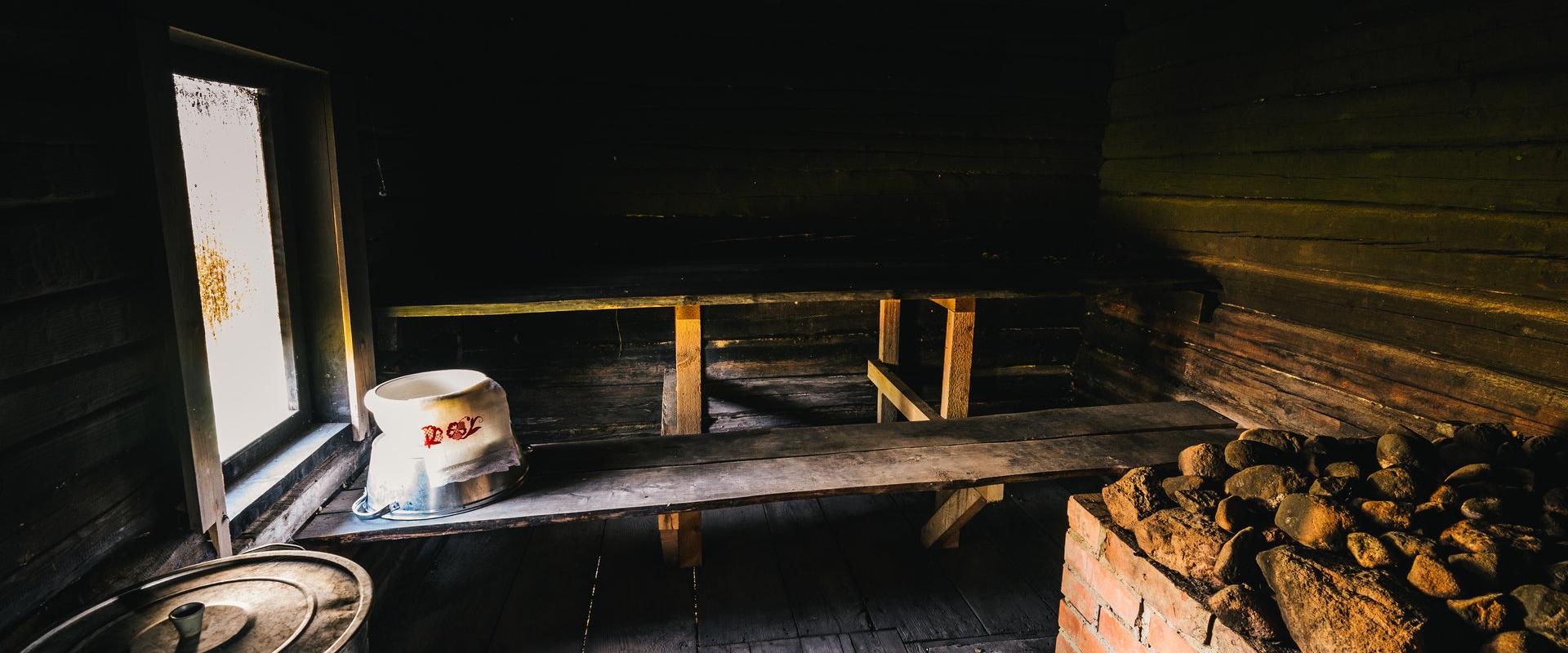
A smoke sauna — savusauna in Finnish, suitsusaun in Estonian — is a sauna room without a chimney. Instead of venting combustion gases to the outside through a flue, a smoke sauna burns large quantities of wood directly inside the room beneath a massive pile of stones called a kiuas. The fire fills the room with smoke and heat for several hours. Once the stones are fully saturated with thermal energy, the fire is allowed to die. The smoke slowly exits through a small vent hole near the ceiling and, once cleared, the sauna is ready for bathing.
The result is a room that has been essentially cured by smoke. Every surface — the benches, the walls, the ceiling, the stones — is coated in a fine layer of creosote and soot that acts as a natural disinfectant and preservative. The characteristic darkness of the savusauna interior, pitch-black and primal, is not neglect. It is history, layered use by use onto the wood.
The heat produced by this process is categorically different from what you get in a modern sauna. Because the stones absorb hours of slow-burning fire rather than the quick output of an electric element, they carry enormous thermal mass. They release heat gently and consistently, lasting up to twelve hours after the fire goes out. The air inside, once the smoke clears, is unusually soft and humid — never sharp or aggressive. Bathers regularly describe it as the most enveloping, therapeutic heat they have ever felt.
The Ancient Origins of the Savusauna
The smoke sauna is not simply old. It is one of the oldest structures human beings have deliberately built for health and community. Archaeological evidence suggests that early sauna-like pit structures in Finland date back as far as 7,000 BC — simple earthen hollows with heated stones where families sheltered, bathed, and gathered. By roughly 500 AD, Finns had evolved these pit dwellings into above-ground log structures: dedicated bathing buildings heated by wood fire without a chimney. The savusauna, as a distinct architectural form, had arrived.
For well over a thousand years, the savusauna was simply the sauna. Every Finnish family that built one followed the same sequence: fire the kiuas for six to eight hours, let the smoke clear, scrub the benches clean of loose soot, and then enjoy heat that lasted through the evening and well into the night. The sauna served not only as a bathhouse but as a delivery room, a healing space for the sick, a place to prepare the dead for burial, and the social and spiritual center of rural life. The word sauna itself is thought by some linguists to derive from savuna — meaning, quite literally, "in smoke."
The chimneyless design was eventually modified during the Industrial Revolution when metal woodstoves with flues became available. The new design was faster, cleaner, and easier to maintain — and the savusauna quickly receded to remote rural properties and the memories of older generations. By the mid-20th century, it had nearly disappeared entirely. Then, in the 1980s, Finnish enthusiasts began to actively revive it. Today, the tradition is formally recognized on the world stage: UNESCO inscribed the Estonian smoke sauna tradition on its Intangible Cultural Heritage list in 2014, and Finnish sauna culture — with the savusauna at its ancestral core — followed in 2020.
How a Smoke Sauna Actually Works
The process of preparing a smoke sauna is as much ritual as it is logistics, and understanding it helps explain why the experience feels so different from anything a modern sauna can produce.
Preparation begins four to eight hours before bathing. The sauna attendant — traditionally the head of the household — loads the firebox beneath the kiuas with a large quantity of hardwood and lights the fire. Because there is no chimney, the fire burns directly in the sauna room. Smoke fills the space entirely. This is intentional: the smoke is part of the heating process, transferring energy to the walls, benches, and ceiling as it rises and circulates. The fire burns for hours, slowly driving heat deep into the massive stone bed above it.
Once the stones reach temperature, the fire is extinguished. Remaining coals and ash are removed. Water is splashed on the stones — a practice identical to the Finnish löyly ritual — which creates a burst of steam that helps drive the residual smoke out of the room through the ceiling vent. The sauna then airs for another thirty to sixty minutes, until the smoke has cleared and the air is clean and breathable. Benches are wiped down and, if removable, have been kept outside during the fire to minimize soot accumulation on the sitting surfaces.
What remains when you enter is a room at roughly 140–175°F (60–80°C), with notably higher humidity than a conventional electric sauna but lower than a steam room. The moisture content of the air is exceptional — a product of the wood combustion process itself, which releases water vapor as wood burns. Pouring water on the stones, the classic löyly, is still performed enthusiastically. The steam rises into already-conditioned air, producing a sensation of gentle, enveloping warmth rather than a sharp blast of heat.
The Smoke Sauna Experience
Stepping into a savusauna for the first time is disorienting in the best possible way. The room is dark — genuine darkness, not just dim lighting. The walls and ceiling are black, absorbing what little light there is. The scent is unmistakable: wood smoke, warm stone, and something faintly mineral, like the smell of a stone fireplace long after the fire has died. It is profoundly calming before the heat even registers.
The heat, when it does register, does not announce itself aggressively. It settles. It wraps around you. The high humidity means your sweat is productive immediately — you begin perspiring within minutes — but the experience never feels punishing. Regulars describe the savusauna as meditative in a way that electric saunas rarely achieve, partly because of the soft heat and partly because the darkness and the scent create a sensory environment that is genuinely disconnected from modern life.
Traditional savusauna custom includes the use of a vihta (or vasta) — a bundle of fresh birch branches bound together and used to gently beat the skin during a session. The practice stimulates circulation, opens pores, and releases the pleasant fragrance of birch leaves into the warm air. Combined with the wood smoke and steam, it creates a multi-sensory ritual that has been essentially unchanged for a thousand years. You can find traditional sauna accessories, including buckets, ladles, and sauna stones, to bring this ritual into your own sessions.
Cooling off between rounds is considered essential. Traditional savusauna culture in Finland involves jumping into a cold lake between sessions — a practice that maps directly onto modern contrast therapy, alternating heat and cold to amplify circulatory and recovery benefits. Multiple rounds are the norm: enter, sweat, cool, repeat. The relaxed tiredness that follows a proper savusauna session is famous among its enthusiasts: deeply physical, completely unhurried, and free of the edginess that too-hot modern saunas can produce.
 The Health Benefits of Smoke Sauna Bathing
The health benefits associated with regular sauna use are well-documented and apply broadly to any high-quality heat bathing practice. The smoke sauna delivers these benefits — and its unique combination of soft humid heat, thermal mass, and multi-sensory environment may enhance some of them.
Cardiovascular conditioning. Heat bathing triggers a physiological response closely parallel to moderate aerobic exercise: heart rate elevates, cardiac output increases, and peripheral blood vessels dilate. The core body temperature rises, and the body works to cool itself through increased circulation. Regular sauna use has been associated in large longitudinal studies with reduced rates of fatal cardiovascular events, with frequency of sauna use correlating directly to benefit.
Deep muscular relaxation. The heat produced by a well-fired savusauna penetrates muscle tissue thoroughly, reducing tension and soreness. Athletes and manual laborers have used traditional Finnish saunas for recovery for generations. The particularly even, sustained heat of a smoke sauna — rather than the sharp peaks of an electric heater — is especially effective for deep tissue release.
Stress reduction and mental clarity. Sauna bathing triggers the release of endorphins and reduces circulating cortisol. The sensory environment of a smoke sauna — darkness, warmth, the scent of wood and stone, the absence of screens and noise — amplifies this effect significantly. Many savusauna devotees describe it as the most effective tool they have found for genuine psychological decompression.
Skin health. The combination of deep sweating, steam, and the slightly antimicrobial properties of wood smoke residue on the walls creates an exceptionally clean bathing environment. Pores open fully, impurities are expelled, and the steam hydrates the skin. Regular bathers often report noticeably improved skin texture and tone.
Improved sleep. Core body temperature elevation followed by the gradual cooling process after a sauna session has well-established connections to deeper, more restorative sleep. A proper savusauna session, with its long, unhurried nature, positions the body optimally for sleep in the hours that follow.
Natural disinfection. This is specific to the smoke sauna: the creosote and phenolic compounds deposited on walls and benches by wood smoke are documented antimicrobial agents. Far from being a hygiene concern, the soot lining a properly maintained savusauna actively suppresses bacterial growth. The word "antiseptic" was not yet in use when Finns figured this out empirically, but the science has since confirmed it.
Smoke Sauna vs. Traditional Finnish Sauna: What's the Difference?
Both the smoke sauna and the modern Finnish wood-burning or electric sauna share the same fundamental mechanics: heat stones, pour water, produce löyly. The differences are in degree, atmosphere, and the quality of the resulting experience.
A modern sauna with a quality wood-burning heater reaches temperature in 45–90 minutes. A savusauna requires four to eight hours of preparation. That investment is, for many, the entire point: the deliberateness of the process creates an occasion, not just a wellness routine. Families and communities that maintain smoke saunas report that the preparation itself becomes part of the social ritual — gathering wood, tending the fire, waiting together.
The heat quality differs substantially. Modern sauna heaters — even excellent ones — cycle between adding heat and losing it. A savusauna's massive, deeply saturated stone bed releases heat with extraordinary consistency over an extended period. The air is softer because combustion-produced humidity has been absorbed into every surface. Temperatures run slightly cooler on average — typically 140–175°F versus the 180–200°F of a hard-fired modern sauna — but the perceived warmth is more thorough and more comfortable.
Aesthetically, a savusauna is incomparable. There is no modern sauna that replicates the sensory environment of a dark, smoke-cured room with ancient stones. If you have ever found modern saunas slightly clinical, slightly loud, slightly unsatisfying despite the heat, a savusauna is the antidote.
The Smoke Sauna's Cultural Significance Today
In Finland, the savusauna occupies a special place in the national imagination — as the purest expression of the country's oldest thermal bathing tradition. Many rural Finnish families still have one, and heating the smoke sauna is reserved for significant occasions: Midsummer (juhannus), Christmas Eve, Easter, and important family gatherings. In Karelia, the smoke sauna is called the "black sauna" — a name that conveys both its appearance and the weight of tradition attached to it.
In Estonia, the smoke sauna tradition in the Võromaa region has been continuously practiced for centuries and carries UNESCO protection as an intangible cultural heritage. Estonian smoke saunas are communal spaces where birth, healing, and death rites are still performed according to custom.
Latvia and Lithuania maintain their own smoke sauna traditions as well, underscoring that this is not a narrowly Finnish phenomenon but a Baltic and Northern European heritage shared across an entire cultural region. The wood-fired, stone-heated, chimney-free sauna was the universal bathing technology of the northern world — and its revival reflects a broader global hunger for authentic, unhurried wellness rituals rooted in something real.
Bringing the Smoke Sauna Spirit Home
A true savusauna — properly built, without a chimney, fired over six to eight hours before each use — is not a realistic option for most American homeowners. It requires the right structure, the right setting, and a genuine commitment of time and effort that modern life rarely accommodates. But the qualities that make the savusauna exceptional can absolutely be approximated in a well-chosen outdoor sauna, and the closer you get to the original formula, the better your sessions will be.
The most important variable is heat source. An outdoor wood-burning sauna gets you closest to the savusauna experience. Burning real wood produces combustion moisture that electric elements cannot replicate, and the ritual of building and tending a fire creates the deliberate, unhurried atmosphere that defines the smoke sauna tradition. If you are serious about authentic heat bathing, our selection of wood-burning sauna heaters — from Harvia, HUUM, and Narvi — gives you the foundation of a genuinely traditional experience. For guidance on choosing the right heater for your space, our complete sauna heater guide walks through every option in detail.
The second variable is stone mass. Traditional savusauna kiuas are enormous — far larger than any residential heater — and their thermal mass is what produces the characteristic sustained, even heat. Modern heaters with the largest stone capacity available will outperform smaller units in both löyly quality and heat consistency. Look for heaters rated for your room's cubic footage at the higher end of their range, and fill the stone bed fully with quality sauna stones.
For structure, barrel saunas and log cabin saunas capture the outdoor, wood-immersed character of savusauna culture better than any indoor installation can. Positioned in a backyard, beside a pond, or at the edge of a wooded lot, a quality outdoor sauna becomes a destination — a place you go to deliberately, rather than a room you step into quickly. That intentionality is the soul of the smoke sauna tradition, and it is available to anyone willing to invest in a well-built outdoor structure.
 Complete your setup with the accessories that make any sauna session feel intentional. A proper wooden bucket and ladle for pouring löyly, a quality thermometer and hygrometer to monitor your environment, a birch or eucalyptus whisk for skin stimulation — these are not luxuries. They are the tools of a practice that has been refined over a thousand years. Browse our full range of sauna accessories to complete your setup the right way.
If you are starting from scratch, our outdoor sauna collection covers every style and budget, from compact two-person barrels to full cabin saunas large enough for family use. And if you want everything bundled together and ready to go, our complete sauna packages include heater, stones, and accessories alongside the structure — nothing to source separately.
A Final Word on the Smoke Sauna
The savusauna endures not because it is easy or modern or efficient. It endures because it is honest. It demands time, wood, fire, and patience, and in return it delivers a bathing experience that no amount of digital control or premium engineering has fully replicated. The heat is alive in a way that electric heat simply is not. The atmosphere is irreplaceable. The ritual of preparing and sharing a smoke sauna connects the people who do it to something genuinely ancient — a thread of human wellness practice that runs from Finnish Iron Age pit dwellings straight to your backyard.
You may not build a traditional savusauna this year. But understanding what makes it extraordinary is the best possible starting point for building any serious sauna. Start with the right heat source, the right structure, and the right accessories — and you will be closer to that ancient warmth than most people alive today ever get.
Browse our full outdoor sauna collection and find the build that fits your space, your climate, and your idea of the perfect session.


发表评论